
How to Access ChelseaBet Old Mobile Booking Login in Nigeria
🔐 Learn how to access ChelseaBet old mobile booking login in Nigeria with simple registration, login tips, secure your account and place bets smoothly. 🎯
Edited By
Sophie Harris
The Chelseabet old mobile shop booking app once played a useful role in Nigeria's mobile commerce landscape. It was a platform where users could reserve phones easily from various mobile shops without the usual hustle of trooping to multiple vendors.
Designed primarily for Nigerians keen to secure new or used phones in busy markets, the app simplified the booking process. Users could browse available phone models, check prices, and place holds for collection or delivery. In a market cluttered with countless shops across cities like Lagos, Abuja, and Port Harcourt, this convenience was particularly valuable.
At its core, the app aimed to connect customers directly to mobile sellers, bypassing long queues and bargaining uncertainties common in physical markets. Its interface allowed quick searches by brand, price range, or shop location, making it easy for buyers to find what they needed without moving through traffic jams or enduring bad weather.
Many users found the app helpful for comparing prices across shops, especially during ember months when mobile demand spikes.
However, while the Chelseabet booking app opened doors for easier phone reservations, it faced challenges. Limited internet infrastructure in some areas slowed access, especially outside major cities. Also, payment processes were not fully integrated initially, meaning buyers had to arrange payment separately, sometimes leading to cancellations.
Despite its early utility, the app grew outdated as newer, more integrated platforms emerged. Competitors offered better UX, real-time stock updates, and secure payment options, making Chelseabet's approach less appealing over time. Additionally, many shops adopted their own digital sales channels, reducing the reliance on a single booking platform.
Understanding the Chelseabet old app gives insight into how Nigerian mobile shopping evolved. It laid groundwork for digital booking but underlines the need for seamless services tailored to local tech realities and consumer habits.
Understanding the Chelseabet mobile shop booking app starts with recognising its role in simplifying phone purchases in Nigeria's bustling mobile market. The app bridged gaps between customers and mobile shops, making reservation straightforward and limiting the usual rush in physical stores, especially in busy urban centres like Lagos and Abuja.
Chelseabet grew out of the need to streamline the often chaotic process of buying mobile phones in Nigerian cities. At launch, many shoppers faced long queues or uncertainty about stock availability at preferred mobile shops. Chelseabet aimed to fix this by enabling customers to reserve phones in advance, cutting down time spent wandering from one shop to another.
The app also tapped into Nigeria’s growing smartphone penetration and expanding internet access, targeting users keen to leverage digital solutions instead of traditional, physical shopping experiences.
The primary users were tech-savvy individuals aged between 18 and 35 years who preferred online conveniences. This demographic includes young professionals, students, and small business owners who value efficiency and want to avoid the hassle of physical visits.
Market-wise, Chelseabet focused on urban centres where mobile shops cluster and demand for new phones or accessories is high. The app aimed to serve both the retail customers and mobile shop owners who hoped to expand their reach digitally.
At its base, Chelseabet allowed users to browse available mobile phones from various shops, check prices, and book their desired items. This function eliminated uncertainty about stock and secured purchases before buyers even stepped into the store.
Besides booking phones, the app included features such as payment options integration and notifications, improving the overall convenience in the buying journey.
Booking a phone was fairly straightforward: users searched by brand or model, picked the preferred shop, and reserved the item by confirming their details. The reservation held the phone for a set period, typically 24 to 48 hours, within which the buyer had to complete payment or collection.
This process helped reduce cases of stock-outs and disappointment, directly addressing common complaints by Nigerian mobile shoppers.
Chelseabet embraced a simple User Interface (UI) that prioritised ease of use. Clear menus, visible categories, and step-by-step prompts allowed even less experienced users to navigate without frustration.
For example, the app had filters like price range, brand, and shop location, which helped users narrow down options quickly, a relief for those not wanting to scroll endlessly.
One strong point was how the app linked directly with mobile shops’ inventory systems. This meant live updates on stock levels, prices, and special offers were possible.
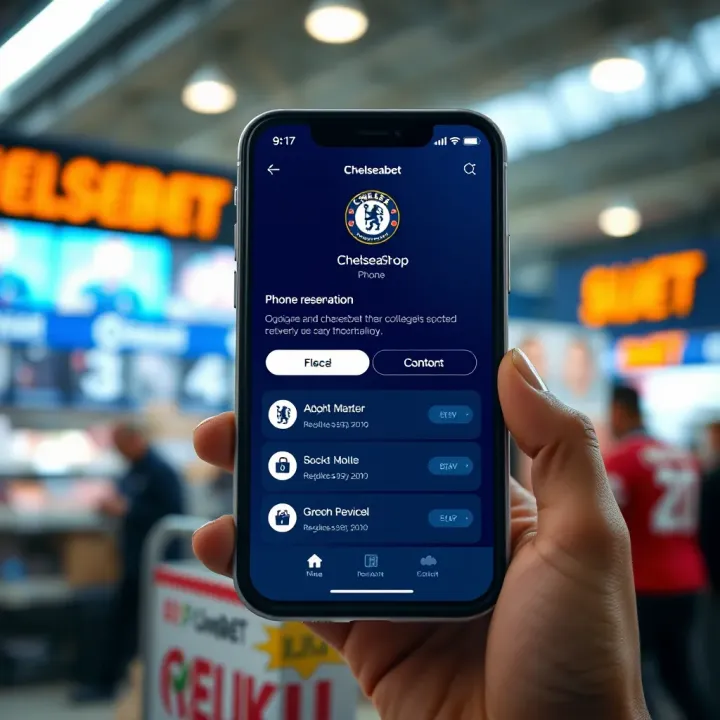
Mobile shop owners managed bookings and stock directly through a companion portal. This integration ensured real-time accuracy and improved trust between customer and seller, reducing fake listings or unavailable items.
The Chelseabet app was a notable digital effort to address the Nigerian mobile shop sector’s operational challenges by blending convenience with real-time stock management, especially useful amid a high-demand environment.
Overall, this overview sets the stage for understanding how Chelseabet functioned and the practical benefits it offered to both users and mobile shops, marking an early step in Nigeria’s mobile retail digitisation.
The Chelseabet mobile shop booking app served as a bridge between buyers and mobile retailers across Nigeria. Instead of visiting multiple shops physically—often battling Lagos traffic or worrying about showrooms running out of stock—customers could locate nearby shops offering their desired phone models. This was especially useful in cities like Abuja and Port Harcourt, where mobile shops are scattered. By presenting options within a few clicks, the app eased the traditionally cumbersome process of mobile phone shopping.
Beyond just listing shops, the app gave users quick access to shops specialising in various phone brands, including popular ones like TECNO, Infinix, and Samsung. For instance, a user looking specifically for a tokunbo iPhone could find the closest retailer stocking the model, saving time and transportation costs.
A core advantage for users was the ability to book or reserve phones in advance. During peak seasons like the ember months or festive periods such as Christmas and Sallah, mobile shops often see hikes in demand. The app's scheduling feature helped customers secure their purchases without the risk of losing out to last-minute buyers.
This reservation system also limited unnecessary movement, an important factor considering Nigeria’s power outages and the cost of fuel for generators. Shoppers could make confirmed bookings and only visit the shop when assured of availability. It also worked well for professionals or busy Lagosians who couldn’t afford long queues or wasted commutes to locate particular mobile devices.
For mobile shop owners, Chelseabet opened doors to a wider range of customers beyond their immediate vicinity. Physical stores limited to foot traffic were no longer confined geographically. Shops in cities like Ibadan or Enugu attracted Lagos customers looking for competitive prices or specific phone models. This geographic expansion translated into stronger sales, especially for smaller retailers who lacked brand visibility.
The app also encouraged impulse and planned purchases by reminding users of available promotions and new stock arrivals via push notifications. For example, a shop running a discount on a particular smartphone during the ember months could quickly notify potential buyers, increasing footfall and revenue.
Aside from sales, the app helped stores manage their inventory and customer flow. By tracking reservations and appointments, shop managers avoided overbooking or understocking common in busy periods. This improved customer satisfaction, reducing instances of disappointment when a reserved phone was unavailable.
Moreover, the app simplified record-keeping, facilitating basic data on customer preferences and buying behaviour. Shops could tailor stock orders and marketing strategies accordingly, which is crucial in Nigeria’s volatile currency environment where overstocks or wrong orders can be costly.
In a market where many depend on physical visits and word-of-mouth, the Chelseabet app introduced a digital layer that brought order and predictability to buying and selling mobile phones.
In essence, Chelseabet played a useful role by linking customers to mobile shops, offering convenience, and helping retailers operate more efficiently in Nigeria’s bustling mobile phone market.
When examining the Chelseabet old mobile shop booking app, understanding its limitations and challenges is essential. These issues shaped user experience and determined how well the app could compete in Nigeria’s fast-moving tech scene. Most importantly, recognising these drawbacks helps explain why newer platforms quickly outpaced Chelseabet.
A key limitation of the Chelseabet app was its inconsistent stability and performance. Users often reported delays when loading shop listings or booking slots, especially during peak times like ember months when demand spiked. Again, given Nigeria’s patchy internet infrastructure, slow or unstable network meant the app sometimes failed to connect or crashed unexpectedly. This not only frustrated users but also disrupted their plans to reserve phones or accessories, leading some to abandon the platform altogether.
The app's design posed another hurdle. Compared to newer apps built with more modern frameworks, Chelseabet’s interface felt cluttered and unintuitive. Navigation was sometimes confusing for users who were not tech-savvy, especially older customers unfamiliar with smartphone apps. Features like booking confirmation and shop details were not always clearly displayed, making it hard for users to verify their reservations or understand shop policies. Such user interface flaws decreased overall satisfaction and limited mass adoption.
As Nigeria’s mobile booking market matured, Chelseabet faced stiff competition from fresh platforms that offered faster, sleeker, and more reliable services. Apps like OPay and PalmPay, which integrated booking with broader payment and e-commerce options, attracted users wanting a one-stop solution. These competitors improved their offerings quickly, responding better to local demands for speed, convenience, and affordability, while Chelseabet lagged behind.
Chelseabet also struggled because it offered a narrower range of features. For example, it lacked real-time stock updates from shops, detailed user reviews, and flexible payment options that newer apps included. Without features like instant chat support or loyalty programmes, it failed to engage users beyond initial booking. This limitation reduced repeat usage and made the platform less appealing to mobile shops aiming to boost customer loyalty and sales.
Challenges like inconsistent performance and limited features eventually made Chelseabet outdated, paving way for more versatile mobile shop booking apps customised for Nigerian users.
Understanding these barriers reveals why the app could not keep pace with evolving user needs and technological improvements. For anyone tracking Nigeria’s mobile tech growth or betting on app success in this sector, these insights are valuable to grasp market dynamics better.
Understanding why the Chelseabet old mobile shop booking app lost its relevance offers insight into the fast-moving dynamics of tech adoption in Nigeria. Several factors contributed to its decline, ranging from the rapid pace of technology innovation to local economic challenges, which are crucial to grasp for anyone analysing app lifecycles in the Nigerian fintech and retail space.
Rise of more versatile booking apps: As mobile technology advanced, newer apps emerged with richer features and better user experiences that the Chelseabet app couldn't match. These modern apps often integrated multiple services beyond just mobile phone booking, such as payment wallets, delivery tracking, and real-time inventory updates. For example, platforms like Jumia and Konga adapted swiftly by offering seamless mobile shopping experiences coupled with reliable customer support, overshadowing simpler apps like Chelseabet.
This versatility meant users could rely on a single app for more needs, making Chelseabet appear limited and outdated. Businesses too found it easier to manage orders and customers via apps that offered analytics and marketing tools, features missing from Chelseabet’s original design.
Changing user preferences: Nigerian consumers increasingly expect intuitive interfaces and quicker processes. Smartphone users today favour apps that load fast, are data-efficient, and deliver seamless transactions without constant glitches. Chelseabet struggled to keep pace with these demands as newer apps responded better to user feedback and adopted more current user interface designs.
Additionally, younger Nigerians are more digitally savvy and prefer integrated experiences combining social proof like user reviews and ratings, which were not part of the Chelseabet offering. These changing preferences naturally led users away from older, less interactive platforms.
Challenges with Nigeria’s internet infrastructure: Nigeria’s internet infrastructure remains uneven, especially outside major urban centres. The Chelseabet app's older architecture was not optimised for low-bandwidth conditions or unstable connections common in many regions. This often resulted in frustrating experiences for users whose networks dropped or slowed, discouraging regular use.
Apps that later succeeded invested heavily in lightweight designs that function well on 2G/3G networks or made offline features available, providing more reliability for users battling poor internet quality.
Cost implications for users: Mobile data costs in Nigeria can be a significant barrier for many, especially when apps are data-hungry. The Chelsebet app, due to its less efficient coding and extensive server requests, ended up consuming more data, making it expensive for users to operate regularly.
With average data prices hovering around ₦200-₦300 per gigabyte, users became more selective, favouring apps that conserved data and offered more value for their money. This economic reality limited Chelseabet's appeal, particularly among budget-conscious Nigerians who rely on affordable mobile services.
In sum, the decline of the Chelseabet app illustrates the necessity for technology solutions in Nigeria to evolve with user expectations, infrastructure realities, and economic constraints for sustained success.
The mobile shop booking landscape in Nigeria has witnessed significant transformations, reflecting broader digital adoption and shifting consumer habits. As smartphone penetration deepened and internet connections became more reliable, users demanded more efficient, flexible ways to book phones and accessories without the traditional hassle of physical queues and uncertainty over stock availability. The Chelseabet app served as a pioneering platform, but newer solutions emerged to address gaps related to user experience, network constraints, and expanding features.
Current popular booking apps have improved significantly over the last few years. Platforms like Jumia, Konga, and OPay have integrated mobile shop booking functions directly into their ecosystems. Their blend of online marketplaces with mobile payment options allows users to reserve devices, schedule pickups, or request home delivery effortlessly. These options appeal particularly to busy Lagosians and other city dwellers who often juggle tight schedules and want to avoid Lagos traffic or jingles to shops.
Features improving customer and shop experience have become more customer-centric and technologically savvy. Real-time stock updates help customers avoid disappointment. Some apps enable users to chat directly with sellers or negotiate prices before booking. For shops, features like sales analytics, digital receipts, and inventory management improve operations and reduce manual errors. Going beyond Chelseabet's basic booking function, these enhancements ensure smoother transactions and stronger trust between buyers and businesses.
Trends in app development point towards more integrated and intelligent solutions. We're seeing app developers incorporate AI-driven recommendations based on purchase history or preferences, plus contextual promotions during ember months or festive periods. Mobile apps are designed to work well even in unstable network environments, optimising data usage. These trends cater to Nigerian realities where data affordability and connection reliability remain concerns for many.
Potential innovations tailored to Nigerian users include deeper integration with local payment systems like Paystack and Flutterwave and partnerships with telecom providers to offer zero-rated data access to booking platforms. Other innovations could feature AI-powered price comparisons between physical and online shops, or social shopping where groups can collectively negotiate prices on high-demand phones. Such innovations reflect an acute understanding of local challenges—from naira depreciation impact on phone prices to typical customers’ preference for negotiating deals in person but still wanting the convenience of online booking.
The evolution from Chelseabet to today's multi-featured booking platforms shows how Nigeria's mobile retail sector adapts quickly to consumer needs, leveraging technology to bridge gaps and enhance shop access.
The journey of mobile shop booking apps underscores the blend of digital growth with a fine grasp of local consumer behaviour, promising richer options for buyers and shops alike over the coming years.
🔐 Learn how to access ChelseaBet old mobile booking login in Nigeria with simple registration, login tips, secure your account and place bets smoothly. 🎯

Ready to register your Chelseabet mobile shop in Nigeria? 📱 Follow this clear step-by-step guide on requirements, documents, benefits, and avoiding common hiccups.
📱 Learn the step-by-step process to register and log in to the old ChelseaBet mobile app safely. Get tips on troubleshooting and understand why the old app still holds appeal for Nigerian bettors.

Discover Chelseabet's sports betting and online gaming services in Nigeria 🎯. Learn about easy registration, payment options, Chelseabet shops, and safe betting tips 💰🏪.
Based on 14 reviews